Law Firm SEO Audit Checklist: What to Review Before Hiring an Agency — Sydney, New South Wales
Law firm SEO audit checklists should test technical SEO, search visibility, content quality, local signals, conversion paths, reporting and agency accountability. LawyerSeoMarketing.com.au uses these checks to help Sydney, New South Wales law firms assess an agency before engagement.
What Should a Law Firm SEO Audit Checklist Cover?
A law firm SEO audit checklist should cover technical health, search visibility, legal content, local presence, conversion paths and the agency's reporting process.
A useful law firm SEO audit connects website findings with business goals. The review should show how technical SEO, local SEO, content quality and conversion rate optimisation affect website enquiries.
Professional-services competition in Sydney, New South Wales makes technical discoverability and clear differentiation important. Accurate local business information and low-friction enquiry paths also help a law firm turn search visibility into useful contact opportunities.
Before the Audit: Check the Agency's Scope
An SEO audit scope should explain what the agency will inspect, why each check matters and how the findings relate to your law firm's objectives.
We recommend confirming the following points before access is granted. A clear scope reduces gaps between the promised audit and the final agency deliverables.
A strong scope links keyword research and competitor analysis to decisions the firm can act on. It also states which parts of the website and which data sources are included.
Our SEO Audits review is organised around the firm's objectives, target practice areas and search opportunities.
What Should You Ask Before Sharing Website Access?
You should ask what access the agency needs, which checks it will perform, what it will deliver and how it will protect your website and business data.
Website access should be limited to what the audit requires. Ask whether Google Search Console and Google Analytics access can be provided through appropriate user permissions rather than shared passwords.
Data privacy should be addressed before any client, enquiry or performance information is reviewed. The agency should also explain how it will separate audit evidence from recommendations and who can view the material.
Audit deliverables should identify technical issues, content opportunities, local search opportunities and conversion opportunities. The final report should be understandable to both the firm's decision-makers and the people responsible for implementation.
During the Audit: Review These Technical SEO Checks
Technical SEO checks should show whether search engines can access, understand and use the law firm's website.
We treat technical findings as practical issues, not isolated scores. Each finding should explain its effect on search visibility, user experience or future content work.
Technical findings should identify affected pages and explain the recommended fix. A report that lists crawlability or indexability problems without showing their location is difficult to implement.
The related guide, Technical SEO Checklist for a Lawyer Website Before Launch, is useful when the website is being redesigned or moved.
How Can You Judge the Audit's Search and Content Analysis?
You can judge the analysis by checking whether it connects search intent and practice area content to specific opportunities, priorities and recommended actions.
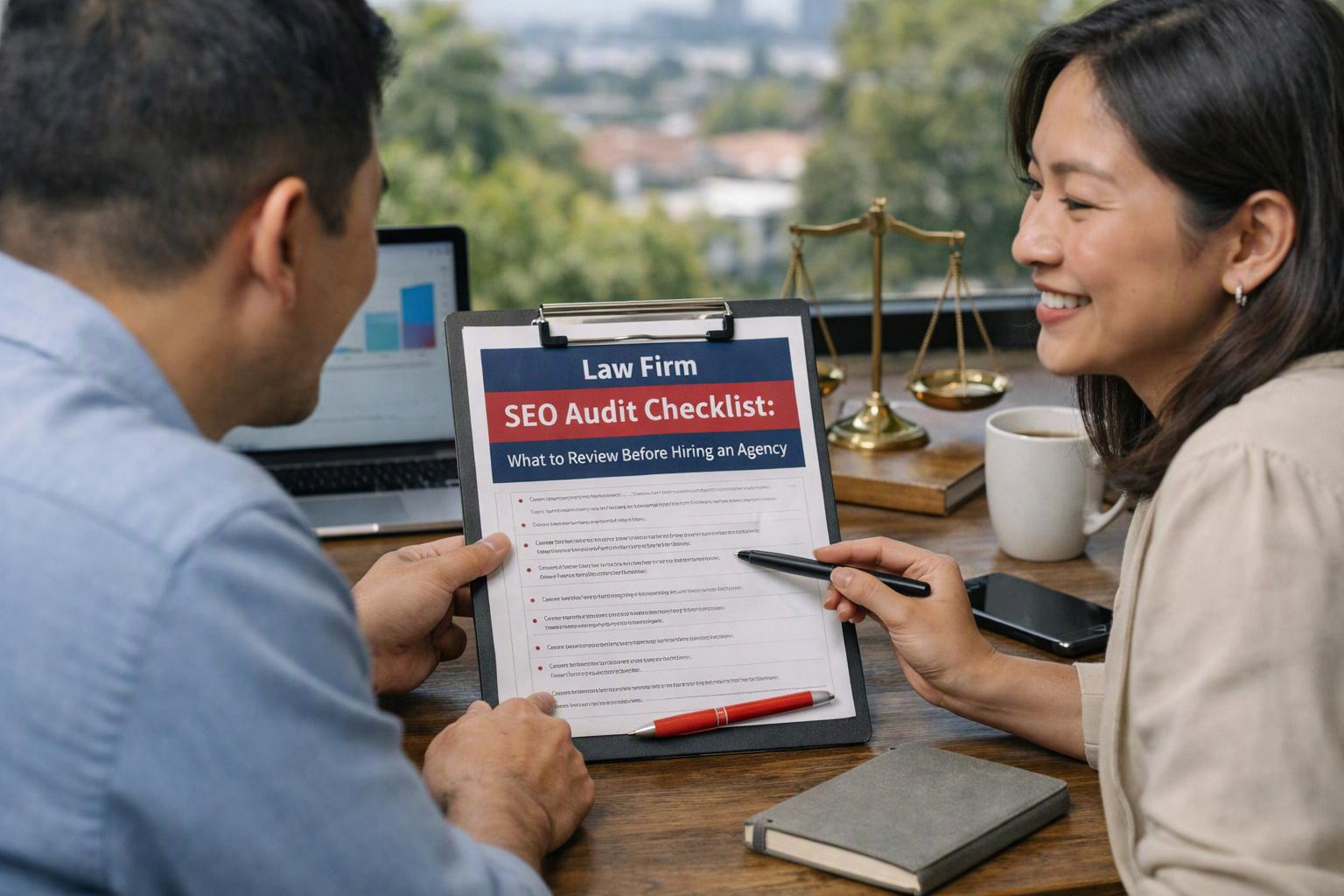
Keyword mapping should connect relevant searches with suitable practice area pages and legal service content. The audit should explain whether each page matches the reader's search intent.
On-page SEO should cover page titles, headings, useful copy and internal linking. Content should answer real client questions without making unsupported legal claims.
The review should consider experience, expertise, authoritativeness and trustworthiness in the context of legal information. It should also compare competitor visibility to identify missing topics, weak page coverage or opportunities for clearer differentiation.
Content strategy is useful when it leads to a defined page purpose and a practical publishing or improvement plan. Generic advice to publish more content does not explain what the law firm should do next.
After the Audit: Test the Recommendations
SEO recommendations should be tested against business value, implementation effort and the effect on enquiries.
A prioritised action plan helps the firm decide what to address first. We look for clear links between audit findings, landing pages, user actions and reporting.
Recommendations should be specific enough for our team or the firm's web team to implement. A useful audit makes progress easier to review because each action has a clear purpose.
Conversion rate optimisation should connect search traffic with completed forms, calls or other agreed enquiry paths. Traffic alone does not show whether the website supports the firm's intake process.
Which Red Flags Suggest an Incomplete Law Firm SEO Audit?
Red flags include generic recommendations, unsupported guarantees, unclear reporting and an audit that ignores enquiries and conversion paths.
These warning signs suggest that the audit may not reflect the firm's practice areas, local competition or commercial goals.
An audit should help the firm make an informed agency decision. If the findings cannot be traced to the website, search data or business objectives, the scope may be incomplete.
How LawyerSeoMarketing.com.au Uses the Checklist
LawyerSeoMarketing.com.au applies the checklist across SEO Audits, Technical SEO and Conversion Rate Optimisation, then explains the findings and next actions for the law firm's website.
We review technical health, search intent, practice area pages, local visibility and conversion paths as connected parts of the website. This approach helps us explain how a technical issue can affect content, local search or enquiry generation.
Our local review includes the firm's Google Business Profile, business information and relevant local citations. The related guide, Local SEO Checklist for Law Firms: Google Business Profile and Citations, can help frame that part of the assessment.
We present audit findings in plain language and organise them into an action plan. Free Estimates Available applies when the firm asks us to scope the required work after the review.
What Should a Useful Audit Deliver to Your Law Firm?
A useful audit should deliver prioritised findings, evidence for each recommendation, clear implementation guidance and a way to assess progress.
An audit report should identify technical issues and explain their effect on crawlability, indexability, page experience or search visibility. Content opportunities should name the relevant practice area, search intent and recommended page action.
Local search opportunities should cover business information, the Google Business Profile and relevant local citations. Conversion opportunities should show where a landing page, enquiry form or contact path creates avoidable friction.
A measurement plan should define the signals used for review, including relevant Search Console and Analytics data. SEO reporting should then connect completed work with changes in visibility, website behaviour and website enquiries.
Law firms can request a tailored assessment through our contact page.
Questions About Law Firm SEO Audits
What access does a law firm need to provide for an SEO audit?
A law firm may need to provide website access, Google Search Console access and Google Analytics access, depending on the agreed audit scope. The agency should explain each permission, protect business data and identify the audit deliverables before access is shared.
How can a law firm tell whether an SEO audit is specific to its practice areas?
A law firm can check whether the SEO audit names its practice areas, maps search intent to relevant pages and compares competitor visibility in those legal services. Specific recommendations should identify pages, priorities and actions instead of offering generic content advice.
What should an SEO audit report show about enquiries and conversion paths?
An SEO audit report should show how landing pages, enquiry forms, calls and other contact paths support enquiry generation. The report should identify friction, explain the evidence and connect conversion recommendations with SEO reporting.
Which SEO recommendations should a law firm prioritise after an audit?
A law firm should prioritise recommendations that affect important pages, search visibility, user access or enquiry paths. The prioritised action plan should explain business value, implementation requirements and how progress will be measured.