
What Is a URL Slug?
A URL slug is the readable part of a web address that identifies a specific page, usually after the domain name. It often uses words that describe the page topic, separated by hyphens. A clear slug helps users understand the destination and gives search engines useful context about the page.
Quick Facts About URL Slug
Category
Website address component
Used for
Identifying individual web pages
Common confusion
Confused with the domain name
Also called
Slug, URL path segment
Often discussed with
Law Firm Website Development, On-Page SEO
Key Takeaways About URL Slug
- A slug identifies one page within a website.
- Readable words help visitors recognise a page destination.
- A slug is not the same as a domain name.
How URL Slug Works
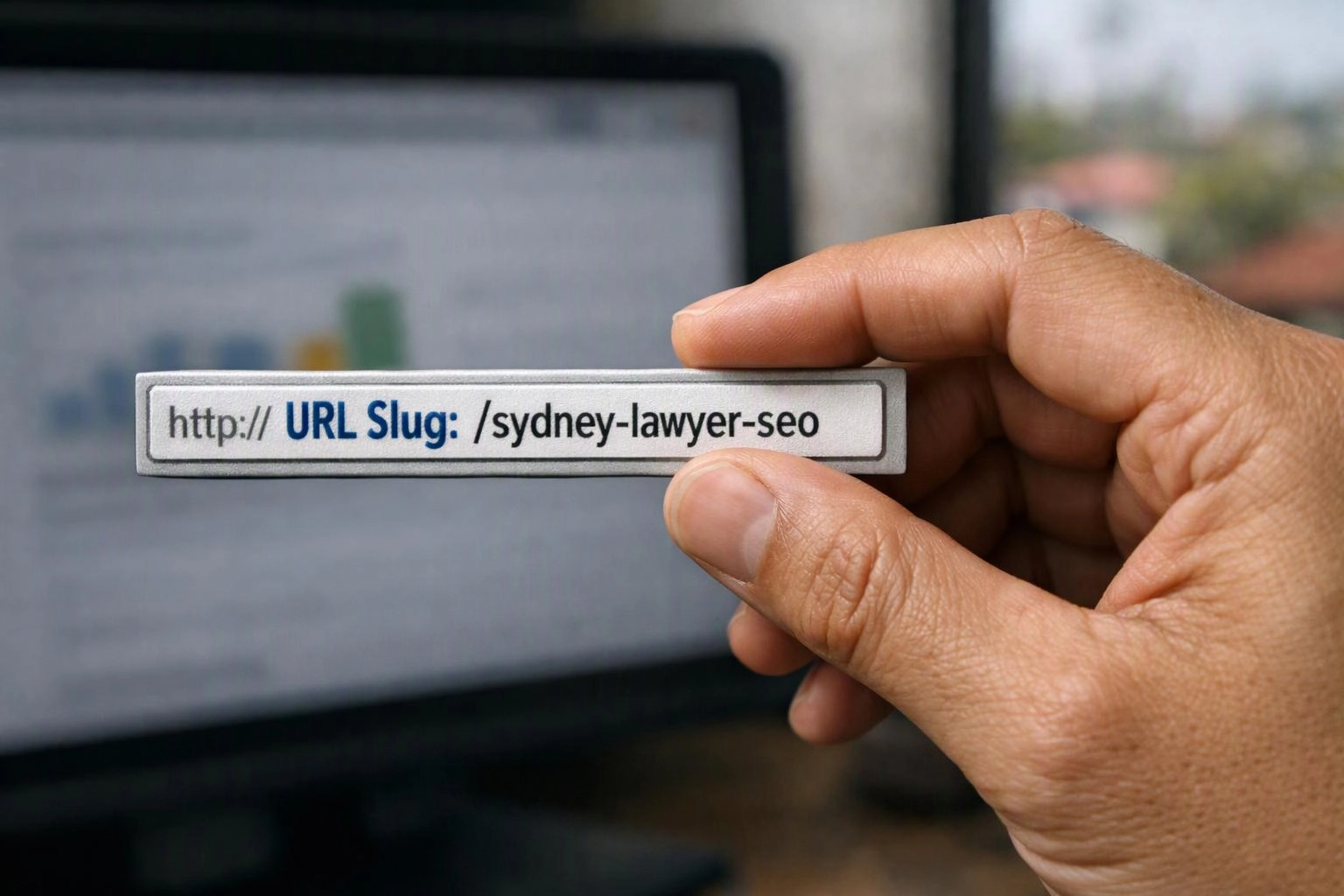
A URL Slug appears after the domain name and points to a particular page. Web systems usually create it from the page title or a chosen target phrase. Hyphens separate words, while clear wording makes the address easier to read and share.
Related glossary terms: Canonical URL, Internal Linking, Title Tag.
Website developers can set a slug when they create a page, then update it if the page focus changes. A changed slug needs a suitable redirect from the old address so visitors and search engines can reach the new page. A canonical URL identifies the preferred address when similar pages exist, while the slug forms part of that address. Internal Linking can then refer visitors to the page through relevant links.
Expert Note
When we develop a law firm website, we create slugs that reflect the page topic and its place in the site structure. Our team checks wording, hyphen use, and existing addresses before launch. We also review redirects when an established page receives a new slug.
URL Slug in Practice: A Real-World Example
A law firm website might use the slug family-law for a page describing family law services. The complete address could be example.com.au/family-law, where family-law identifies the page within the website.
Related Services
Related Terms
Canonical URL
Canonical URL is the preferred address for a webpage when similar or duplicate versions exist. A…
Internal Linking
Internal Linking is the practice of connecting pages within the same website through clickable links. These…
Title Tag
Title Tag is an HTML element that names a webpage for search engines and browser tabs…
Search Intent
Search Intent is the purpose behind a search query, such as seeking information, comparing options, finding…
LawyerSEOMarketing.com.au
Have Questions About URL Slug?
Contact LawyerSEOMarketing.com.au for practical guidance on URL Slug and related lawyer seo marketing work in Sydney.