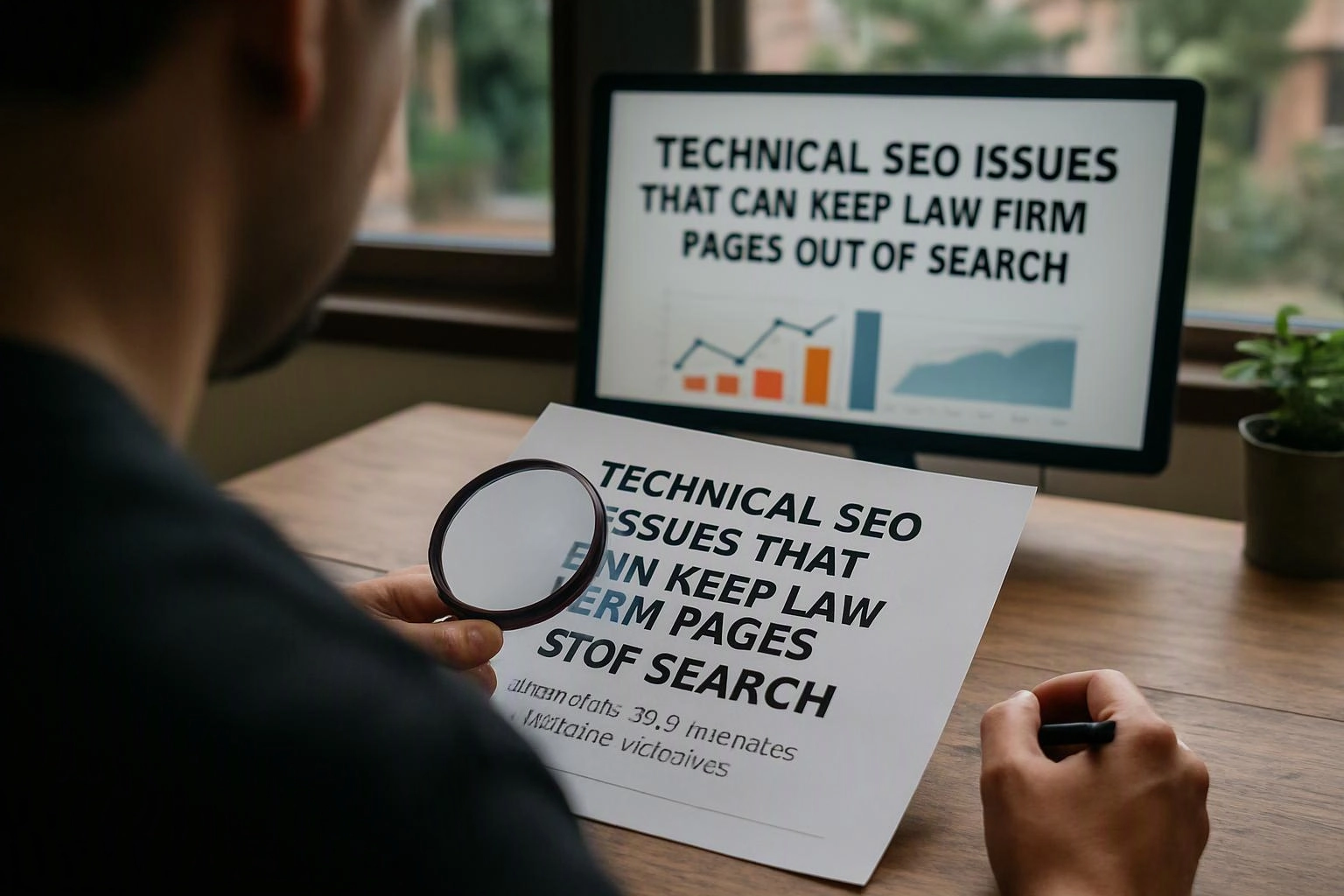
Technical SEO Issues That Can Keep Law Firm Pages Out of Search
Technical SEO mistakes can prevent law firm pages from being crawled, indexed or understood by search engines. At LawyerSEOMarketing.com.au, we identify these issues through technical SEO audits and provide the fixes needed to improve search accessibility.
Which Technical SEO Problems Keep Law Firm Pages Out of Search?
Technical SEO problems keep law firm pages out of search when search engines cannot crawl, index or interpret the pages correctly. These problems can affect crawlability, indexing and search visibility across legal service pages and practice area content.
Google Search relies on search engine crawlers to access URLs, understand page relationships and decide which pages can appear for relevant searches. A page can contain useful legal content and still remain difficult to find when website technical issues block that process.
Blocked Crawling Prevents Search Engines From Reaching Important Pages
Robots.txt blocking can stop Googlebot from reaching important law firm service pages. This often happens when a staging rule remains on the live website, a broad directive blocks a useful folder, or the XML sitemap lists URLs that the robots.txt file restricts.
The cost is lost search access and wasted effort on pages that crawlers cannot properly inspect. We review crawl rules, test important URLs and align the XML sitemap with the pages the law firm wants search engines to discover.
Noindex Directives Remove Valuable Law Firm Pages From Search
A noindex directive tells search engines not to include a page in their index. A meta robots tag, HTTP header or content management setting can add the directive without the page owner noticing.
The cost is reduced indexing for valuable legal service pages, even when those pages are crawlable. We inspect meta robots settings, HTTP headers and indexability reports, then remove an incorrect directive and check that the canonical URL supports the intended page.
Incorrect Canonical Tags Consolidate Signals Onto the Wrong URL
A canonical tag identifies the preferred version of a page for search engines. A canonicalisation error can point a practice area page to another URL, causing duplicate content signals to consolidate on the wrong page.
The cost is weaker relevance for the page that should serve a search intent. We compare canonical URLs with page content, internal links and sitemap entries, then correct the tag so the URL signals support the intended practice area page.
Poor Internal Linking Leaves Practice Area Pages Orphaned
Internal linking helps search engines and visitors move through a law firm website. Orphan pages have few or no useful internal links, so search engine crawlers may struggle to discover their relationship with the wider site architecture.
The cost is weaker discovery and less clear importance for practice area pages. We map navigation, contextual links and relevant service relationships, then connect orphan pages to suitable sections of the law firm website.
Weak Website Structure Makes Legal Services Hard to Understand
Site architecture organises practice areas, service pages and supporting content into a clear hierarchy. Poor URL structure, missing breadcrumbs and unclear information architecture can make legal services difficult for both users and search engines to understand.
The cost is weaker topical clarity and a confusing path between related pages. We review the website hierarchy, URL structure, breadcrumbs and navigation, then plan technical remediation that reflects the firm’s real services and search intent.
Duplicate or Thin Legal Pages Dilute Search Relevance
Duplicate content repeats substantially similar information across URLs, while thin content provides too little useful information for the page’s purpose. Location pages and practice area content can develop these issues when pages are copied without adding distinct value.
The cost is diluted relevance and weaker content quality signals. We compare similar pages, assess their search intent and recommend consolidation, expansion or clearer differentiation where the content does not serve a distinct user need.
Slow or Unstable Pages Create Technical Performance Problems
Page speed affects how quickly users can access legal information and interact with a page. Slow server response, heavy JavaScript and poor mobile usability can create problems reflected in Core Web Vitals and wider page experience signals.
The cost is a poorer user experience and more difficult access on mobile devices. We assess loading behaviour, JavaScript, server response and mobile-first indexing concerns, then identify performance changes that support stable page delivery.
Broken Links and Redirect Chains Disrupt Page Discovery
Broken links lead to unavailable URLs, while redirects send users and crawlers from one URL to another. A redirect chain adds unnecessary steps, and a 404 error can appear after a URL migration or website restructure.
The cost is interrupted discovery, poorer navigation and weaker transfer of link equity. We crawl internal links, review redirects and repair broken paths so important legal service pages remain connected and accessible.
Missing Structured Data Limits Legal Entity Understanding
Structured data is markup that describes a page, organisation or relationship in a format search engines can process. Missing or unsuitable Schema.org markup can limit understanding of a law firm, its services and its page hierarchy.
The cost is less clarity about the legal entity and fewer opportunities for a suitable search appearance. We assess relevant LegalService, Organisation and BreadcrumbList markup, then correct the structured data so it matches the visible page content.
How We Map Each Technical SEO Mistake to Its Fix
Our SEO audit connects each technical issue with its search impact and the action needed to resolve it. This approach keeps technical remediation focused on useful pages, clear evidence and practical changes.
| Technical issue | Search impact | Diagnosis | Technical remediation |
|---|---|---|---|
| Robots.txt blockage | Crawlers cannot reach key pages | Crawl report and URL testing | Adjust rules and confirm access |
| Noindex error | Pages cannot enter the index | Meta robots and header review | Remove or correct the directive |
| Canonicalisation error | Signals consolidate on the wrong URL | Canonical and duplicate-page comparison | Set the intended canonical URL |
| Orphan page | Discovery and importance are unclear | Internal link and architecture review | Add relevant contextual links |
| Slow page | Access and page experience suffer | Performance and mobile review | Prioritise loading and stability fixes |
| Missing structured data | Entity and page relationships are less clear | Schema.org markup review | Add accurate, page-matched markup |
We prioritise fixes according to their effect on crawlability, indexability, usability and search visibility. The required work depends on the website platform, page templates, migration history and the condition of the affected URLs.
How We Audit a Law Firm Website for Technical SEO Issues
Our technical SEO audit follows a structured path from discovery to verification. We use the evidence from crawlers and Google Search Console to separate isolated errors from wider website problems.
This process helps us identify whether a page is blocked, excluded, misrepresented or difficult to understand. It also shows which fixes support the wider site architecture.
When Should You Ask LawyerSEOMarketing.com.au to Investigate?
Ask us to investigate when a technical change or search performance change suggests that important pages may no longer be accessible. We can review the website condition and connect the symptoms with likely crawl, indexing or structure issues.
These situations can involve several connected errors, so we review the affected pages and their surrounding signals together. Our SEO Audits focus on diagnosis before recommendations.
What a Technical SEO Audit Should Resolve
A technical SEO audit should resolve the barriers that stop search engines from reaching, indexing and understanding useful law firm pages. It should also explain the evidence behind each recommendation.
Our audit work covers crawlability, indexability, site architecture, page performance and search engine signals. We connect findings to affected URLs, page templates and internal relationships so the technical plan can be acted on.
The cost of remediation depends on the issue, its spread across the website, the platform and the access needed to implement the change. We provide an exact quote after reviewing the work required.
How Technical SEO Fixes Support Law Firm Search Visibility
Technical SEO fixes support law firm search visibility by making practice area pages easier to crawl, index and understand. Clear access and structure allow useful legal content to compete for the searches it is designed to serve.
We use technical audits to connect website changes with organic search needs. Fixing blocked pages, weak internal links, incorrect canonicals and performance problems gives search engines clearer signals about the firm’s services.
Technical work does not replace useful legal content or sound search intent. It gives those assets a stronger technical foundation so search engines and users can access them reliably.
Questions About Law Firm Technical SEO Issues
Why are some law firm website pages not indexed by Google?
Law firm website pages may not be indexed by Google when robots.txt blocks crawling, a noindex directive excludes them, canonical tags point elsewhere, or the pages provide weak access and structure. We check crawl reports, index coverage, page signals and internal linking to identify the cause.
Can a website redesign remove law firm pages from search?
Yes, a website redesign can remove law firm pages from search when URLs change without suitable redirects, templates add noindex directives, internal links disappear, or the XML sitemap is not updated. We compare the old and new structures and check the migration signals.
How can I check whether robots.txt is blocking a legal service page?
You can check the robots.txt file for rules that cover the legal service page’s path, then compare those rules with crawl and indexing reports. We test the important URL, review the XML sitemap and confirm whether the blocked path should be accessible.
What should a law firm audit after changing its website platform?
A law firm should audit redirects, URL structure, robots.txt, canonical tags, noindex settings, XML sitemap entries, internal linking, mobile usability and page performance after changing its website platform. We also compare index coverage before and after the change to identify lost or excluded pages.