Skip to content

Technical SEO in Hornsby, New South Wales

Technical SEO helps law firms in Hornsby remove website issues that restrict search visibility. We provide free estimates for focused technical work.

Quick Summary: technical website checks in Hornsby, New South Wales

Technical SEO in Hornsby is delivered by LawyerSeoMarketing.com.au for law firms across Sydney, New South Wales, and Australia. The service checks indexing errors, broken links, duplicate content, redirect chains, and thin pages, with free estimates available.

  • What we do: LawyerSeoMarketing.com.au provides Technical SEO for law firms in Hornsby, New South Wales, including indexing, crawl, link, redirect, and page-quality checks.
  • What is included: indexing checks, broken-link reviews, duplicate-content checks, redirect-chain analysis, thin-page checks, and technical recommendations.
  • What you get: The customer receives a prioritised technical action list that identifies which search visibility issues need correction.

Why do indexing errors keep reducing my law firm's search visibility in Hornsby, New South Wales?

Indexing errors can stop search engines from storing or showing important legal pages. Common causes include blocked crawlers, incorrect noindex tags, broken canonicals, and server responses that prevent page access. A technical assessment checks each affected URL and separates a genuine search issue from a reporting warning.

Technical SEO for law firms in Hornsby, New South Wales

Technical SEO focuses on the parts of a legal website that search engines must access and interpret. The work suits firms with missing pages, poor crawl coverage, duplicate URLs, broken internal links, or thin service pages.

The key buyer decision is whether the problem sits in the website's technical setup or in its content and search targeting. We inspect the evidence, explain the likely cause, and set a practical order for the fixes.

Customers who need stronger Google visibility shouldn't treat every warning as an urgent fault. Some reports need action, while others need context from page status, internal links, canonical tags, and index coverage.

  • Check whether important legal pages are available to search engine crawlers.
  • Trace broken internal links and redirect chains between related pages.
  • Compare similar URLs for duplicate content and conflicting canonical signals.
  • Review thin pages that lack enough useful information for their search purpose.
  • Separate technical faults from warnings that do not affect important pages.
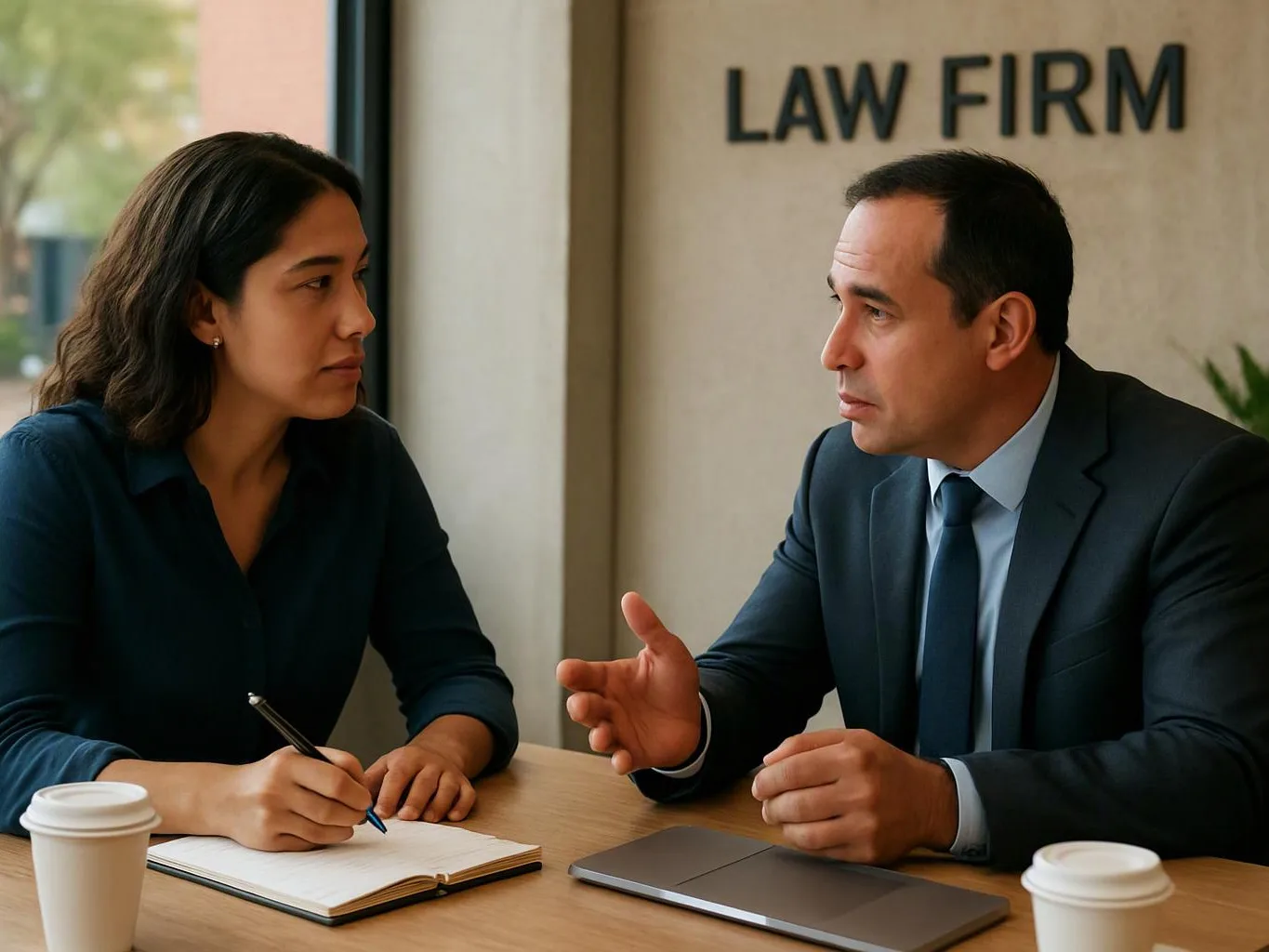
Two people in business clothes talk at a table, with a notebook, laptop, and coffee cups in a law firm office

Service Overview

Technical SEO is a search service that checks the website systems that help search engines crawl, understand, and index pages.

  • Content SEO improves written topics and legal answers, while technical SEO checks access, links, redirects, duplicate URLs, and page signals.
  • Our team provides technical SEO for law firms in Hornsby as part of coverage across Sydney, New South Wales, and Australia.

What technical fixes change for legal search visibility?

Important practice-area pages have a clearer path for crawlers and users.

A cleaner internal link structure helps search engines understand relationships between legal services and supporting content.

Fixing redirect chains reduces unnecessary steps between an old URL and its current destination.

Duplicate-content checks help the firm decide which URL should represent a topic.

Thin-page findings show where a legal page needs more useful substance before promotion.

Clear technical reporting gives decision-makers a record of what was checked and what should happen next.

What technical website work includes for a law firm

LawyerSeoMarketing.com.au provides comprehensive Technical SEO in Hornsby. Here's what you get:

  • We check index coverage, crawl access, noindex directives, and canonical tags across important legal pages.
  • We trace broken internal links and review whether key practice areas connect through a clear site structure.
  • We inspect redirect chains and identify where several URL changes affect the path to a final page.
  • We compare repeated page content and URL versions to find duplication that can confuse search engines.
  • We review thin pages and record where the content needs stronger detail, clearer intent, or a better page purpose.
  • We provide written findings and practical recommendations that help the firm plan its next technical steps.
Process

How we complete a technical website assessment

1

Map the website and priority URLs

We identify the firm's key practice-area pages, supporting resources, and URL groups that need review.

2

Check crawl and index signals

We inspect access rules, noindex directives, canonical tags, index coverage, and page responses for important URLs.

3

Trace links and redirects

We follow internal links and redirect paths to find broken destinations, unnecessary steps, and weak routes between related pages.

4

Compare page purpose and content

We compare similar URLs, headings, and page depth to identify duplicate content or thin pages that need a clearer role.

5

Prioritise the technical actions

We record the findings, explain their search impact, and set out the practical actions the firm can review with its web team.

Why firms choose a focused technical SEO assessment

Evidence before recommendations

Customers receive findings tied to URLs, crawl signals, redirects, links, or page content. Our SEO for Australian law firms is shaped around the firm's legal niches and website structure.

Prioritised technical action

The work separates faults that block access from issues that need content or site planning. That helps a firm choose the next task without treating every warning equally.

Clear reporting and collaboration

Transparent reporting explains what was checked, why a problem matters, and what the firm or its web team needs to change. This service is the wrong fit when the main need is paid advertising or a full content campaign without a technical fault.

Technical checks and the decision they support

Each check answers a different question about how a legal website is accessed and understood.

Technical checkWhat it examinesDecision it supports
Index coverageWhether important URLs are stored or excludedWhich pages need access or index correction
Broken internal linksWhether links reach the intended legal pagesWhich routes need repair or clearer linking
Duplicate contentWhether similar URLs compete or repeat the same purposeWhich URL or content plan should lead
Redirect chainsHow many steps connect an old URL to its destinationWhere the path should be simplified
Thin pagesWhether a page gives enough useful information for its purposeWhether content depth or page intent needs work

Our Standard

  • Tailored SEO Strategies
  • Relevant Legal Content
  • Website Search Optimisation
  • Ethical Marketing Practices

Questions about technical checks for legal websites

Which technical issues can reduce search visibility for lawyers?

Indexing errors can keep important legal pages out of search results. Broken links can block useful paths through the site, while duplicate content can blur which URL should rank. Redirect chains add extra steps, and thin pages can lack enough useful detail. We check these issues together because one fault can affect how another page signal is read.

How does a technical SEO visit move from the first call to the last step?

The assessment moves from website access and priority URLs to checks, findings, and an action list. We then:

  • map important practice-area pages;
  • check crawl, index, link, and redirect signals;
  • compare duplicate or thin pages;
  • explain the findings and estimate the agreed work.

Customers receive a clear record of the checks and recommended next actions.

What does the technical assessment check first?

Priority URLs receive the first check because they show whether key legal services can be crawled and indexed. We review access rules, noindex tags, canonical signals, page responses, and internal links. Customers should provide the website address and the main search concern, then our team can define the relevant review.

Which part of the job changes the estimate?

The website's URL count and issue complexity change the estimate for technical SEO work. A focused check of a small group of pages differs from a wider review of practice areas, resources, redirects, and duplicate URLs. We provide a free estimate after the required checks and deliverables are clear.

How can a customer tell whether technical SEO fits the website?

Technical SEO fits when a website has crawl warnings, missing pages, broken links, duplicate URLs, redirect problems, or thin legal content. It is also useful when a firm cannot explain why important pages lack search visibility. A content campaign may be the better starting point when access and indexing work correctly but the pages lack useful legal detail.

Why do several URLs show similar legal content?

Similar URLs can create duplicate content when they target the same purpose with little meaningful difference. We compare headings, copy, internal links, canonical tags, and page intent to identify the main URL decision. The answer may involve a technical correction, a content rewrite, or a clearer division between related legal services.

What should a law firm provide before the checks begin?

A law firm should provide its website address, priority practice areas, and access needed for the agreed assessment. Search Console or analytics access can add useful evidence when those tools are available. Customers should also flag recent redesigns, changed URLs, or pages they believe search engines have missed.
Contact

Get a Free Estimate for Technical SEO in Hornsby

Request a free estimate for technical SEO checks on your law firm's website in Hornsby. Tell us which pages or search warnings need review.

A woman takes notes while talking with a man across a reception desk in an office lobby

Postal codes we serve in Hornsby, New South Wales

16302077
0493869010